Prediabetes, no medication
You have a tested number in the 5.7–6.4% range, you are already working on food, movement and sleep, and you want nutritional support alongside that rather than instead of it.
GlucoBliss® is a daily wellness formula designed to support healthy blood sugar levels already within the normal range while helping promote natural metabolic balance and overall well-being.
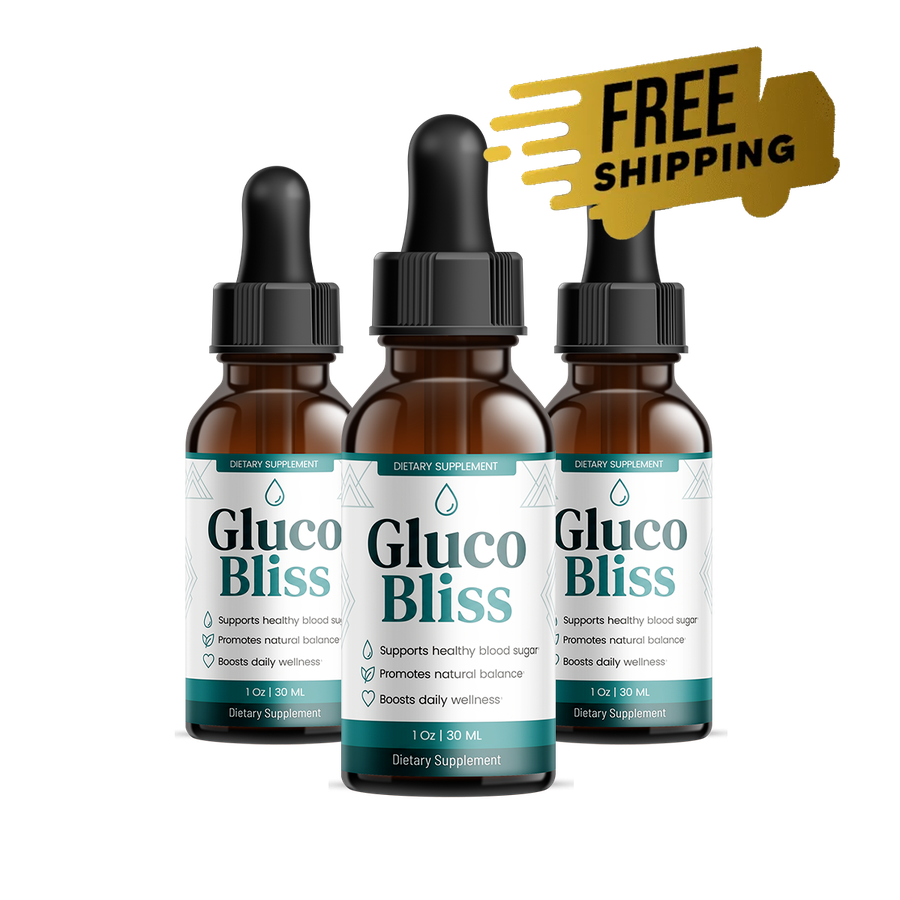
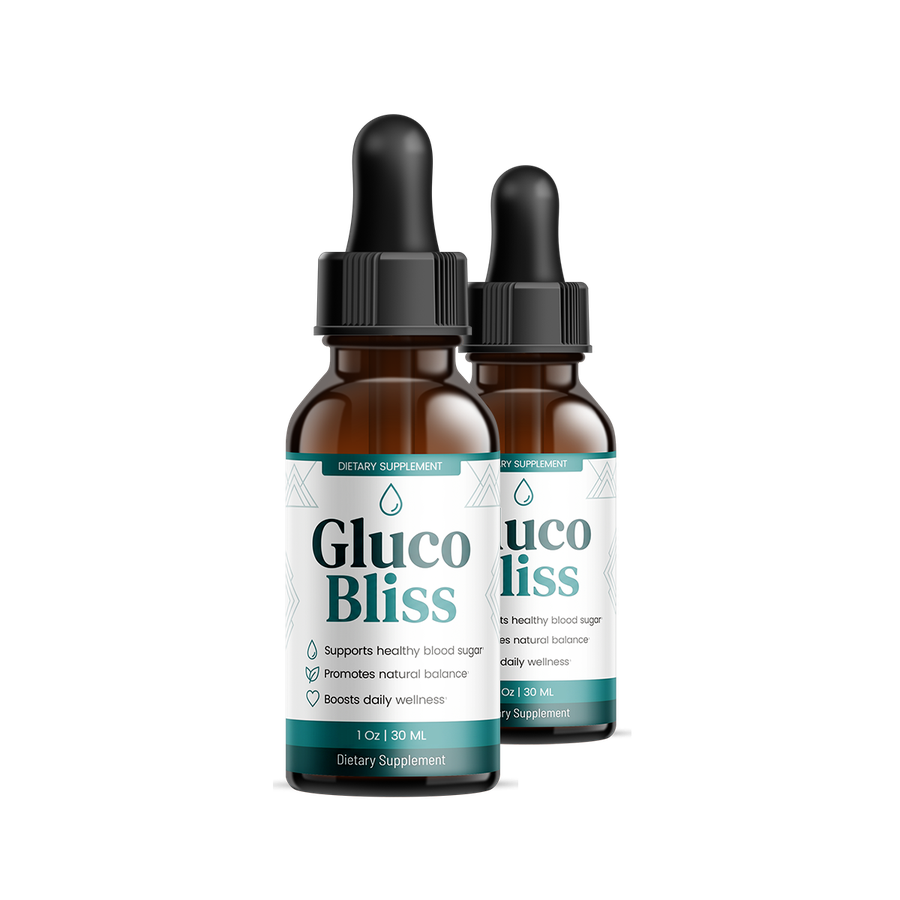
GlucoBliss is a liquid dietary supplement, taken as one dropper daily, marketed to support healthy blood sugar levels, insulin sensitivity and daily energy. Each bottle holds 1 oz / 30 mL and is sold as a 30-day supply. The formula lists six actives: Chromium Picolinate, Gymnema Leaf Extract, African Mango Seed Extract, Green Tea Leaf Extract, Maca Root Extract and Panax Ginseng Aerial Extract.
It is a dietary supplement rather than a medicine, and it is not FDA-approved. Packages run $158 to $294 with a 60-day money-back guarantee counted from purchase date. Two of the six ingredients have genuine glucose-related evidence. Two are largely off-topic. And the product is marketed with language about managing type 2 diabetes that no supplement is permitted to use.
Before anything else: this product can push your blood sugar in either direction, and both are dangerous. Gymnema and chromium have genuine glucose-lowering activity. Taken alongside insulin, a sulfonylurea or another glucose-lowering medicine, they can add to that effect and cause hypoglycaemia — shakiness, sweating, confusion, and at the severe end, seizure or loss of consciousness. In the other direction, marketing in this category encourages people to reduce or stop prescribed diabetes medication, and doing that without supervision lets blood glucose climb toward emergencies including diabetic ketoacidosis. Never change a prescribed diabetes medication to take a supplement, and speak to your pharmacist or prescriber before adding one. Type 2 diabetes is a medical diagnosis managed with prescribed treatment and monitoring — not with drops.
Strip away the marketing and the proposition is simple: a small amber dropper bottle containing six plant and mineral extracts, taken once a day, aimed at adults worried about their blood sugar. It is a liquid rather than a capsule, which the seller presents as an advantage, though the instruction to swallow it rather than hold it under the tongue means it goes through ordinary digestion like anything else.
Two of the ingredient choices are defensible. Chromium picolinate has meta-analysed human data in type 2 diabetes, and gymnema has been studied for glucose effects for decades. Those two carry the formula. Our page on what GlucoBliss is works through the product and who it suits in detail.
The other four are weaker. Green tea extract has modest glucose data and a real hepatotoxicity signal that never appears in the marketing. African mango is a weight-loss ingredient with a thin and criticised evidence base. Maca is an adaptogen with essentially no glycaemic research. And the ginseng is specified as an aerial extract — the leaves and stems, not the root that virtually all the research used.
There is also a timing problem worth naming early. HbA1c, the measure that actually tells you whether anything changed, reflects two to three months. The guarantee lasts sixty days. Those numbers are not compatible, and the gap between them is where buyers lose money.
The most useful thing on this page is not an ingredient list. It is the set of numbers that decides whether a supplement is even the right category of answer for you — and only a blood test can place you.
These are the standard American Diabetes Association diagnostic categories. Before you evaluate any supplement, you need to know which row you are in — because the right response is completely different in each, and only a blood test can tell you.
Nothing here needs correcting. A supplement marketed at blood sugar has nothing to offer you that food, sleep and movement do not already offer more cheaply.
This is the row where change matters most, and where the evidence is strongest — and it is not a supplement. Structured lifestyle programmes have been shown in large trials to cut progression to type 2 diabetes substantially, outperforming metformin in some groups.
This is a medical diagnosis requiring prescribed treatment and monitoring. A dietary supplement cannot manage it, cannot replace medication, and cannot legally claim to. Marketing that suggests otherwise is the single most dangerous thing in this category.
Two things worth adding. HbA1c reflects roughly the previous two to three months, which is why retesting sooner than that tells you very little — and why a 60-day refund window closes before a fair retest. And certain conditions, including some anaemias and haemoglobin variants, make HbA1c unreliable, which is one reason interpretation belongs with a clinician rather than a sales page.
Two of these ingredients genuinely lower blood sugar. That is the selling point and the hazard in one sentence — because adding them to a medicine that does the same thing can take you too low.
Find your medication below. The principle is simple: this product contains ingredients that genuinely lower blood sugar, so adding it to something else that lowers blood sugar can take you too low. This is a summary of documented interaction categories, not a complete list and not medical advice — take the label to a pharmacist.
Insulin carries the highest hypoglycaemia risk of any diabetes therapy. Adding glucose-lowering botanicals on top, without adjusting the dose under supervision, is how people end up in an emergency department. Any addition needs your prescriber involved.
These push the pancreas to release insulin regardless of your glucose level, so they cause hypoglycaemia independently. Gymnema and chromium stack directly onto that risk.
Metformin rarely causes hypoglycaemia on its own, but combined effects are still possible and readings can shift. If you add anything, test more often for the first few weeks and tell your prescriber what you have started.
Lower hypoglycaemia risk alone, higher in combination. SGLT2 inhibitors carry their own considerations around dehydration and ketoacidosis that make unsupervised experimentation a poor idea.
Ginseng has documented interactions with warfarin, and green tea extract contains vitamin K in variable amounts. Anyone on anticoagulation should clear any new botanical first.
Chromium interferes with levothyroxine absorption when taken close together. Separating doses by several hours is the usual advice, but confirm it with your pharmacist.
Concentrated green tea extract has been linked to rare but serious liver injury. If you have liver disease, or take medication that stresses the liver, this ingredient deserves a specific conversation.
Not formulated or studied for these groups, and gestational glucose management in particular is a supervised clinical matter.
Interaction risk drops considerably. The honest question then becomes whether you have a problem that needs solving at all — check the scale above before you spend.
Know the warning signs. Hypoglycaemia typically presents as shakiness, sweating, a racing heart, sudden hunger, irritability or confusion. If you take glucose-lowering medication and start anything new, keep fast-acting carbohydrate with you and test more often for the first few weeks. Severe hypoglycaemia is a medical emergency.
You have a tested number in the 5.7–6.4% range, you are already working on food, movement and sleep, and you want nutritional support alongside that rather than instead of it.
The consultation is free and takes minutes. Photograph the label and go. This applies to metformin as much as to insulin, and to levothyroxine and warfarin too.
That needs prescribed treatment and monitoring. A supplement cannot manage it, and marketing suggesting you can reduce medication is the most dangerous claim in this category.
The meter on each row measures one thing: how much published human research supports that ingredient for blood glucose control — not for weight loss, not for energy, not for antioxidant capacity in a test tube. Two rows score reasonably. Two score very badly, and one of those two is on the label under a name that does not match how the seller describes it.
The ingredient here with the most on-topic evidence, and the one that most deserves a warning label. Known in Ayurvedic practice as the “sugar destroyer,” gymnemic acids appear to reduce intestinal sugar absorption and blunt sweet taste perception. Human trials exist and some report reductions in fasting glucose and HbA1c, though many are small, older, and conducted alongside conventional treatment. That genuine activity is exactly why it matters: an ingredient that really does lower blood sugar can add to a glucose-lowering medicine and tip someone into hypoglycaemia.
A trace mineral involved in insulin signalling and the most researched entry on this label. Meta-analyses of chromium supplementation in type 2 diabetes report small reductions in fasting glucose and HbA1c, with the effect concentrated in people who were deficient or had poorer baseline control. Typical researched doses run 200–1,000 mcg daily. It is not inert: it can add to glucose-lowering medication, and it interferes with levothyroxine absorption if taken at the same time.
Catechins, principally EGCG, have been studied for effects on insulin sensitivity and glucose handling, with modest and inconsistent results in human trials. The more important point is a safety one that marketing never raises: concentrated green tea extract has been associated with rare but serious liver injury, which is why several regulators have issued warnings and why some products carry hepatotoxicity cautions. Drinking green tea is not the same as swallowing a concentrated extract of it.
Read that ingredient name carefully. Essentially all of the ginseng research relating to glucose used the root. “Aerial” means the leaves and stems — a cheaper part of the plant with a different ginsenoside profile and far less supporting human data. What makes this notable is that the official page names it as an aerial extract and then describes it in the very next sentence as “an ancient root.” Both cannot be true. Ginseng also has documented interactions with warfarin and with diabetes medication.
Better known as Irvingia gabonensis, and better known still as a weight-loss ingredient that had a marketing surge on the back of a very small number of trials, several of which drew methodological criticism. Independent reviews have described the evidence base as weak and insufficient. Direct human evidence for blood glucose control specifically is thin. Its presence reads more like a familiar name for the label than a considered formulation choice.
A Peruvian root studied mainly for energy, mood and sexual function. Its research base for blood glucose is close to non-existent. The official page justifies it through a stress and cortisol pathway, which is a real physiological link but a very long way from demonstrating that this ingredient improves glycaemic control in humans. In a six-ingredient blood sugar formula, giving a slot to maca means not giving it to berberine, alpha-lipoic acid or cinnamon — all of which have more on-topic data.
The dose problem. These six actives are listed without individual amounts. That matters more here than in most categories, because the researched doses are known: chromium picolinate studies used 200–1,000 mcg daily, and gymnema trials typically used hundreds of milligrams of standardised extract. A 30 mL bottle delivering one dropper (roughly 1 mL) a day has a real physical ceiling on how much of six ingredients it can carry. Without a published breakdown you cannot tell which ones are at researched levels and which are present in name only. Ask the manufacturer for the amounts in writing before you order — see the full ingredient breakdown.
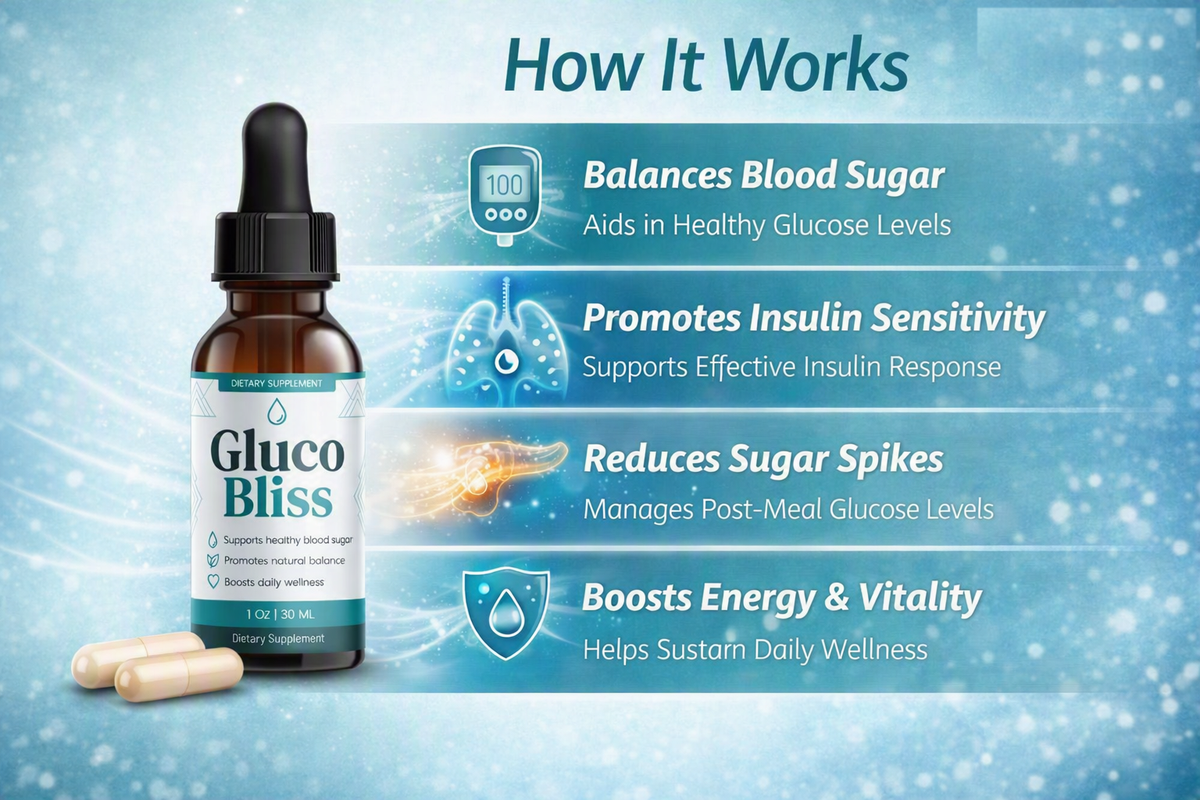
Three pathways carry the plausible part of this formula, and the rest is doing something other than glucose control.
Insulin signalling. Chromium is involved in the cellular machinery that responds to insulin. The theory is that supplying more improves how efficiently cells take up glucose. The evidence supports a small effect, concentrated in people who were deficient to begin with — which is a narrower claim than “improves insulin sensitivity,” but a real one.
Sugar absorption in the gut. Gymnemic acids appear to reduce how much sugar crosses from the intestine into the bloodstream, and they blunt sweet taste perception, which may reduce cravings. This is the most direct mechanism on the label, and it is the reason gymnema can genuinely contribute to hypoglycaemia alongside medication.
Carbohydrate handling and metabolic rate. Green tea catechins have been studied for insulin sensitivity and for slowing carbohydrate absorption. Effects in human trials are modest and inconsistent, and the concentrated extract carries a liver-injury signal that the marketing never mentions.
And the rest. Maca is justified through a stress-and-cortisol pathway, which is real physiology but a long way from demonstrated glycaemic benefit. African mango is justified through leptin, which is a weight-loss story rather than a glucose one. Neither belongs in the top half of a blood sugar formula.
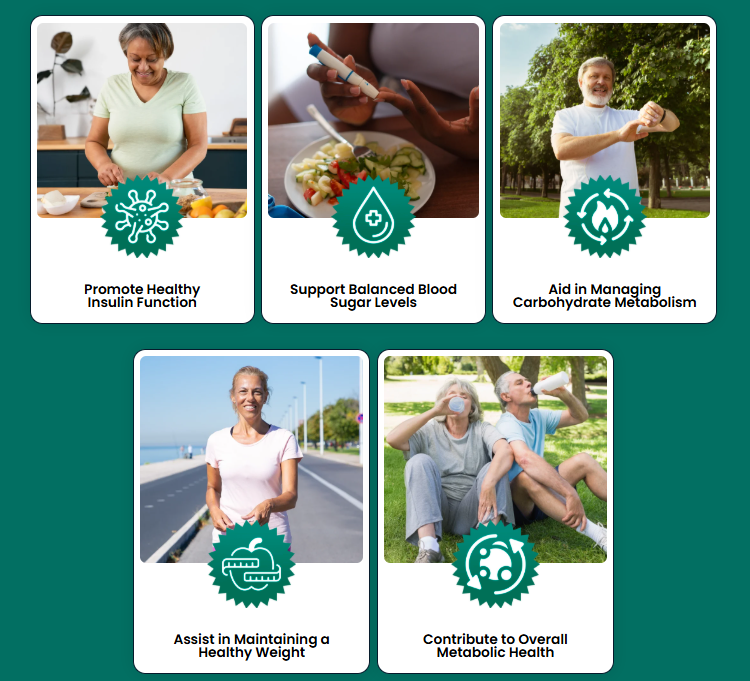
Supplement marketing in this category promises control. The ingredient research supports something much smaller: modest average effects on glucose markers, measured across months, mostly in people whose control was already poor or who were deficient in the first place. Here is the honest version of each claim.
We ran the eight checks a sceptical buyer would run, comparing what this reference publishes against what is available on the official GlucoBliss marketing page.
| Buyer check | Published here | Official GlucoBliss page |
|---|---|---|
| Hypoglycaemia risk with medication | Full board, 9 categories | Not mentioned at all |
| Diabetes claims | Corrected — no supplement may claim this | “Easiest way to manage Type 2” |
| 3-bottle pricing | Contradiction documented ($69×3≠$177) | Both figures printed side by side |
| Individual doses | Undisclosed — and we say so | Not addressed |
| Realistic timeline | ~90 days, tied to HbA1c | Testimonials cite 2–3 weeks |
| Green tea liver signal | Stated plainly | Described only as metabolism support |
| Guarantee conditions | 30-day minimum use flagged | Called “unconditional” alongside a condition |
| Scientific references | Named bodies, linked | A flat image, not clickable |
Reflects the official GlucoBliss marketing page as reviewed in August 2026. Pages change — verify current claims yourself.
“Four stars. My fasting readings did drift down over three months, though I also started walking after dinner in the same period so I cannot separate the two. What I valued was a page telling me to judge it on an A1c at ninety days rather than on how I felt in week two.”

“I am on gliclazide and had no idea gymnema could add to it. This was the only page that said so. I asked my pharmacist, who agreed it was a bad idea for me. I did not buy the product and I am glad I read this first.”

“Three stars. The sweet-craving effect was noticeable within days, which surprised me, but my numbers at ninety days were basically where they started. Reading this site afterwards, the gymnema taste explanation made sense of exactly what I had experienced.”

Testimonials are individual experiences and are not a guarantee of results. Portraits are illustrative stock images, not photographs of the reviewers. There is currently no independent third-party review record for GlucoBliss on platforms such as the BBB or Trustpilot — we would rather tell you that than imply a track record that does not yet exist. Read the full independent review.
A fair assessment needs about ninety days, because that is what HbA1c measures. Your refund window closes at day 60. That mismatch is the most useful thing to know before you choose — and it is why the six-bottle sale price is the best per-day value and the worst first purchase.
60-day supply
$158.00 total + shipping
90-day supply
$177.00 total · free US shipping
180-day supply
$294.00 total · free US shipping
A pricing error worth knowing about. The official order page advertises the three-bottle package at “$69 per bottle” and, directly beneath it, “TOTAL $177.” Those two numbers contradict each other: $69 × 3 is $207, not $177. The $177 total works out at $59 per bottle, and the advertised “save $360” figure is calculated from $177 — so the total is the number the rest of the page agrees with, and the per-bottle figure is wrong. We have shown $59 above because that is what the arithmetic supports, but check what actually appears in your cart before you pay.





Package pricing verified 2026-08-17 against the official order page. Every “you save” figure on that page is calculated against a regular price of $179 per bottle — a number no customer has ever paid. Compare per-bottle and per-day cost instead. Confirm your final total, including tax and shipping, before submitting your order.
The guarantee is real. The word “unconditional” on the same page is not accurate, and the difference decides whether you get your money back.
The 60 days run from your purchase date, not delivery. Your order confirmation email is the record that matters. Diarise day 50.
The policy says the guarantee applies after at least 30 days of use. That is a condition. Your real claim window is roughly days 30 to 60.
Contact customer service in writing before you post anything back, and keep a copy. The timestamp is your evidence that you acted in time.
HbA1c needs about 90 days to mean anything; the guarantee covers 60. Decide inside the window that protects your money, not the one that suits the biology.
Before you submit your order: check the checkout page for any pre-selected subscription or upsell option, and confirm the final total including shipping and tax — particularly on the three-bottle package, where the advertised per-bottle price and the advertised total do not agree. The official page states there is no hidden subscription; verify that on the checkout screen itself, and screenshot it. Full detail on the refund policy page.
GlucoBliss is a liquid dietary supplement, taken as one dropper daily, marketed to support healthy blood sugar levels. Each bottle holds 1 oz / 30 mL, sold as a 30-day supply. The formula lists six actives: Chromium Picolinate, Gymnema Leaf Extract, African Mango Seed Extract, Green Tea Leaf Extract, Maca Root Extract and Panax Ginseng Aerial Extract. It is a dietary supplement, not a medicine, and it is not FDA-approved. Full detail on the ingredients page.
No, and no supplement can. Type 2 diabetes is a medical diagnosis managed with prescribed treatment, monitoring and professional review. A dietary supplement is legally prohibited from claiming to diagnose, treat, cure or prevent any disease, including diabetes. This matters here because the official marketing page headlines “the easiest way to manage Type 2” and runs testimonials describing diabetes control and saving money on diabetes medication. That framing is not permitted, and acting on it can be genuinely dangerous.
Not without asking your prescriber or pharmacist first. Gymnema and chromium have real glucose-lowering activity. Added to insulin or a sulfonylurea, they can push you into hypoglycaemia — shakiness, sweating, confusion, and at the severe end seizure or loss of consciousness. Chromium also interferes with levothyroxine absorption, and ginseng interacts with warfarin. The check is free and takes minutes.
No, and no dietary supplement is. The FDA does not approve supplements the way it approves prescription drugs — there is no pre-market approval and no requirement to demonstrate efficacy before sale. Facilities are registered and subject to inspection, which is a different thing from being approved. The official page states FDA-registered, which is accurate; badges elsewhere in this product family read “FDA approved,” which is not.
Shake the bottle, then take one full dropper daily, ideally in the morning before a meal. Worth noting a contradiction in the official materials: one of the bundled bonus guides refers to “the best times for sublingual absorption,” while the actual instruction says to place it in your mouth and swallow. Those are different routes. Swallowing means normal digestion, so any sublingual-absorption advantage being implied does not apply.
Three packages are offered: two bottles at $158 total plus shipping; three bottles at $177 total with free US shipping; and six bottles at $294 total with free US shipping. That works out at roughly $2.63 a day on two bottles and $1.63 a day on six. Note that the official page advertises the three-bottle package at $69 per bottle while listing a $177 total — $69 × 3 is $207, so those figures contradict each other. Every “you save” claim is anchored on a $179 per-bottle price nobody pays. Current pricing is on the GlucoBliss official website.
The honest measure here is HbA1c, which reflects roughly the previous two to three months of glucose. That means a fair assessment takes about 90 days, and retesting sooner tells you very little. Your refund window closes at day 60. That mismatch is the single most useful thing to know before choosing a package: the three-bottle option covers a fair trial, while the six-bottle option leaves you holding four bottles four months after the guarantee expired.
By ingredient: gymnema and chromium can contribute to hypoglycaemia, especially alongside diabetes medication. Concentrated green tea extract has been associated with rare but serious liver injury. Ginseng can cause insomnia and interacts with warfarin. African mango has reported headache and sleep disturbance. Chromium also blocks levothyroxine absorption if taken together. The finished product has not been studied, so its combined profile is not independently established.
Yes — 60 days from purchase date, but read the wording carefully. The official page calls it unconditional and then adds that it applies “if, after at least 30 days of use, you are not completely satisfied.” A 30-day minimum-use requirement is a condition, which means your actual claim window is roughly days 30 to 60 rather than the full two months. Confirm the terms for your order in writing. Full detail on our refund policy page.
Through the GlucoBliss official website. Be aware that the name “GlucoBliss” appears on a large number of unrelated websites selling completely different formulas — some listing berberine and cinnamon, some listing gymnema and bitter melon in capsule form, and at least one listing ingredients associated with male supplements entirely. Confirm you are on the page whose ingredient list matches the bottle you intend to buy.
There is no evidence the product does not exist or that orders go unfulfilled. What we would push back on is the marketing. The page headlines managing type 2 diabetes, which no supplement may claim. Its testimonials describe controlling diabetes and avoiding diabetes medication. Its three-bottle pricing contradicts itself. Its guarantee is called unconditional while carrying a condition. Its ginseng is named as an aerial extract and then described as a root. And its scientific references section is a flat image rather than links you can check. Our full review works through whether that adds up to a purchase worth making.
Because the name is not effectively protected across the supplement market. Searching it returns numerous sites, each an “official website,” with completely different ingredient lists and dosage forms. Some sell capsules, this one sells drops. The practical consequence for you is that any review, ingredient description or testimonial you read elsewhere may be about a different product entirely. The only reliable reference is the printed label on the bottle you actually receive.
Clinical reviewer
Board-certified ambulatory care pharmacist and Certified Diabetes Care and Education Specialist with fourteen years counselling patients on glucose-lowering therapy and hypoglycaemia recognition. Signs off every safety claim on this site, including the medication board above.
Editor
Consumer health editor. Verifies ingredient data, pricing and refund terms against the product label, the official order page and the published return policy before anything goes live. More about our process.